
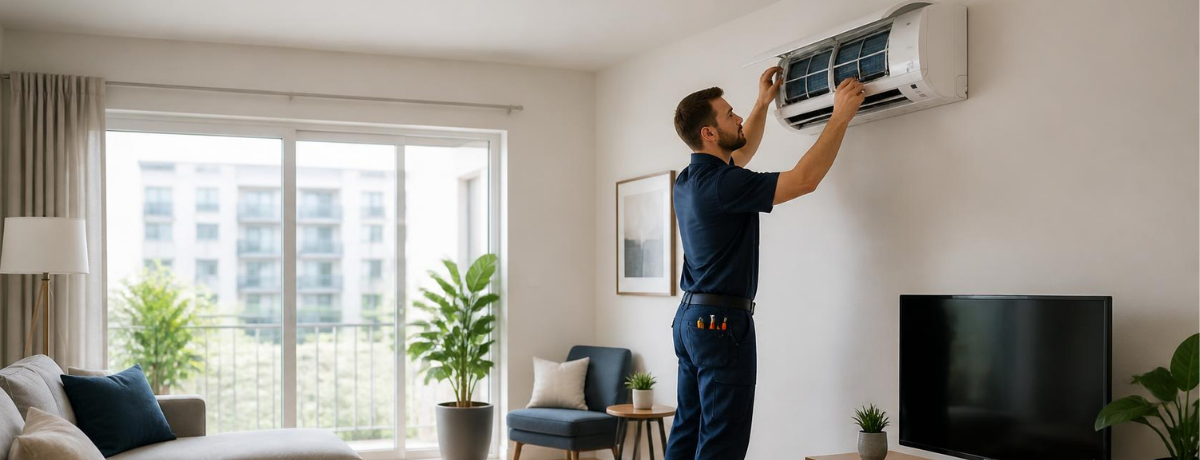
If you ask a group of operators which job is toughest to fill these days, most will point to maintenance technicians. While leasing and front-office positions have mostly settled down in the last few years, maintenance roles remain a challenge.
The numbers tell a tough story. Staffing has topped the industry’s list of challenges for years. In a survey by NAA and AppFolio, 74% of property managers ranked staffing among their top three issues, and half said it was their biggest problem. The industry’s turnover rate, nearly 33% according to the NAA, is much higher than most other fields. The main issue is the pipeline: experienced technicians are retiring faster than new ones join. As one property executive said this summer, more people seem to want out of the profession than in. When a technician leaves, they take years of property knowledge with them, and that information usually isn’t written down.
Most of the industry sees this as a hiring problem. They try to recruit more, offer better pay, work with trade schools, and create clear career paths. These are good steps, and companies doing them well are seeing results. But there’s another side to the problem that doesn’t get as much attention, and it’s something operators can actually address right now.
The year the math changed.
This issue matters even more in 2026 than it did two years ago. This spring, the market changed: new supply dropped by 14% compared to last year’s second quarter, while demand jumped and national vacancy rates fell to 4.3%. Despite this, rents are barely increasing, with year-over-year growth at about half a percent.
So, operators can’t rely on rent increases to boost revenue this year. The trade press agrees: retention, not higher rents, is keeping multifamily revenue steady. When renewals matter most, the resident experience—especially maintenance—becomes a financial issue. Residents happy with maintenance are 71% more likely to renew. In short, the hardest-to-find employees are also the ones driving revenue. That’s unusual for any industry and changes the real cost of the shortage.
Where technician hours actually go
So where do these valuable technician hours actually go? Here’s a typical scenario: A resident calls at 1:40 am about a running toilet in 17D and is very worried it might overflow. She uses the emergency line. The on-call technician, who is still half-asleep, calls her back and finds out that it can wait until morning, and tries to get back to sleep. At 2:15 am, she calls again because no one told her what to do in the meantime. In the morning, the technician enters the details into the system from memory. Later, a second work order for the same toilet comes in because the resident wanted to be sure someone noticed.
None of this needed any tools—the actual repair takes just twenty minutes the next day. The rest was triage, communication, and logging. In other words, it was phone work handled by the property’s most skilled (and expensive) person. Technicians want to do repairs, but dealing with lots of calls that end with “it can wait until morning” quickly becomes frustrating.
The shortage is real, but the easier problem to fix isn’t hiring—it’s how technician time is spent. An after-hours call that didn’t need a technician might be the most expensive call in multifamily today. It uses the industry’s rarest labor for tasks that software could handle, especially when residents are deciding whether to renew.
Protecting the hours you already have
You can’t solve a national pipeline problem from a single property. But you can make sure your current technicians spend their time on work that truly needs their skills.
This is where the phone system proves its value. With HelloSpoke’s Assist, Lou answers after-hours maintenance calls, asks the same questions a technician would, and decides if it’s a real emergency. If it is, the on-call technician gets all the details right away. If not, Lou explains this to the resident and guides her through steps like shutting off the water valve. The work order is entered into the property management system—whether it’s Yardi, RealPage, Entrata, or ResMan. The resident in 17D gets an answer and a plan at 1:40 am, in her preferred language, since Lou speaks over 75 languages. Best of all, the technician learns about the toilet at 8:00 am, with the work order ready and no duplicate requests.
The repair itself stays the same—it still happens and still takes twenty minutes. What’s different is everything else: no more late-night wake-ups, callbacks, second calls at 2:15 am, or extra data entry and duplicate work orders. The resident gets more timely responses, which matters at renewal time. That’s what call-to-completion means for the maintenance shortage: the issue is resolved, and technician hours are saved.
The industry talks about the technician shortage mostly in terms of recruiting, and that’s important. But recruiting takes years, and while you can’t control the pipeline, you can control how you use the hours you already have. In 2026, the most cost-effective technician hour is the one you don’t waste.
FAQ
Why are maintenance technicians so hard to hire in multifamily?
Maintenance technicians are hard to hire in multifamily because the pipeline into the skilled trades is declining. Experienced technicians are retiring, and fewer young workers enter each year; maintenance skills also transfer easily to construction and other industries that compete for the same people. With the industry turnover near 33%, properties are losing technicians faster than the trade replaces them.
What does the shortage have to do with renewals?
With rent growth near half a percent, retention is carrying multifamily revenue in 2026, and residents who are satisfied with maintenance are 71% more likely to renew their lease. The maintenance experience, especially how a request is handled and communicated, is one of the biggest factors in whether a resident renews. A short-staffed maintenance team can cost renewals, making it a revenue problem as much as a payroll one.
Can AI really tell an emergency from a non-emergency?
Lou asks the same questions a technician would ask, such as whether water is actively flowing and whether anyone is in danger. Genuine emergencies escalate to the on-call staff with the details already collected. Everything else becomes a work order in the property management system, and the resident gets told what happens next. Every call is logged either way, so nothing depends on someone remembering a middle-of-the-night conversation.
Does this replace on-call staff?
No, it does not replace on-call staff. Emergencies still go to real people, and your team still handles the repairs. The difference is that technicians are no longer the first contact for calls that didn’t need them, which is what makes on-call rotations so exhausting.
Your technicians’ time is valuable and worth protecting.
If your on-call phone rang last night, ask your maintenance team how many of those calls really needed their help. Then, book a demo and let Lou handle the next after-hours call.

